For many older people across the United Kingdom, the State Pension is more than just a regular payment—it is a vital source of financial stability. With rising living costs continuing to affect everyday essentials like food, energy and housing, even modest increases in pension income can make a significant difference.
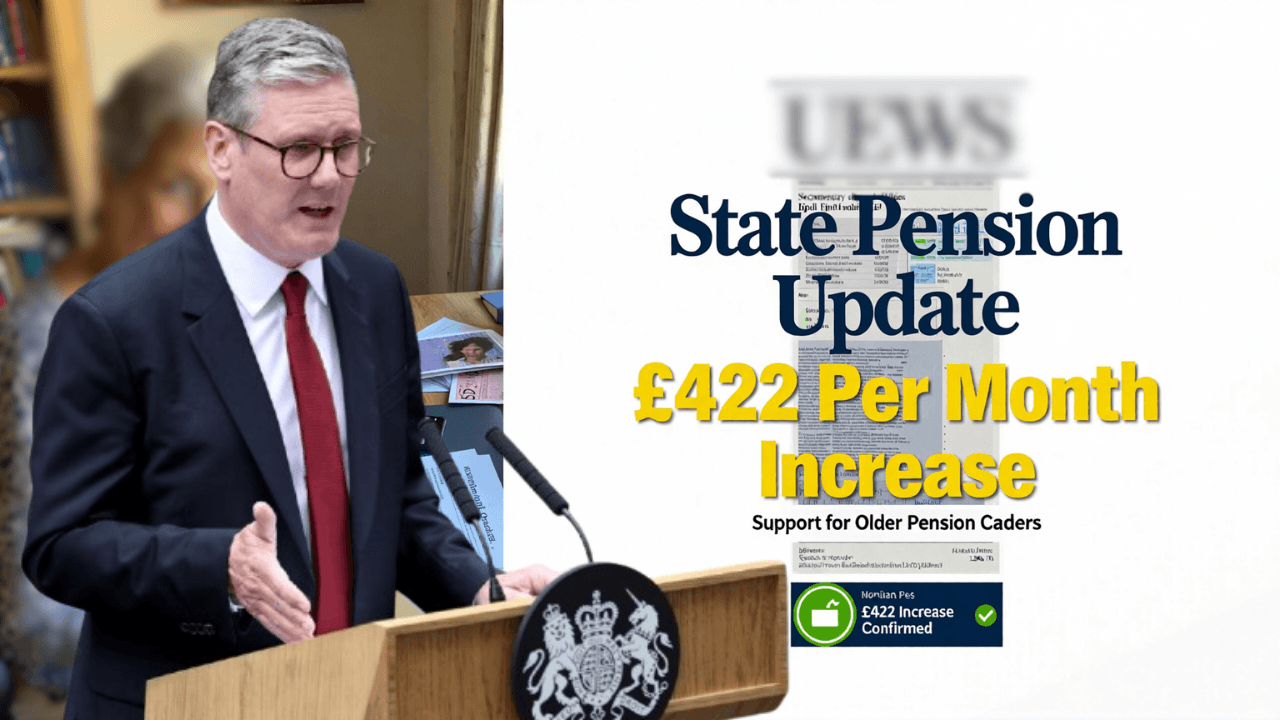
Recent reports highlighting a £422 per month increase for older State Pensioners have understandably caught attention. Many pensioners and their families are asking whether this increase is real, who qualifies and how it could impact their finances.
The update is closely linked to policies managed by the Department for Work and Pensions, which oversees pensions and benefits across the UK.
In this article, we’ll explain everything clearly—what this increase means, how it works and what pensioners should expect.
What the State Pension provides
The State Pension is a regular payment from the government to individuals who have reached the qualifying age and have made sufficient National Insurance contributions.
It is designed to provide a basic level of income in retirement, helping cover essential living costs.
For many people, it forms the foundation of their retirement income, often alongside private pensions or savings.
Understanding the £422 monthly increase
The headline figure of £422 per month does not necessarily mean a universal increase applied equally to all pensioners overnight.
Instead, this figure often reflects:
Combined increases over time
Additional entitlements or support payments
Specific cases where pensioners receive enhanced support
It is important to understand that individual amounts may vary depending on personal circumstances.
Why pension increases are happening
There are several reasons why pension payments are being reviewed and increased.
These include:
Rising cost of living
Inflation affecting household expenses
The need to support older people on fixed incomes
Government commitments to protect pension value
These factors have led to ongoing adjustments in pension payments.
The role of the triple lock system
One of the key mechanisms behind pension increases is the triple lock system.
This system ensures that the State Pension increases each year by the highest of:
Inflation
Average wage growth
2.5%
This approach helps protect pensioners’ income against rising costs.
Who may benefit the most
While all eligible pensioners may see some increase over time, certain groups could benefit more significantly.
These include:
Older pensioners with full National Insurance records
Those receiving additional benefits
Individuals qualifying for extra support schemes
The total increase can vary depending on your circumstances.
How additional benefits can increase income
In some cases, the £422 figure may include combined payments from multiple sources.
For example:
Pension Credit
Housing support
Cost‑of‑living payments
When combined, these can significantly boost monthly income.
What this means for pensioners
Even if the full £422 increase does not apply to everyone, any rise in pension income can provide meaningful support.
It can help with:
Energy bills
Food and household expenses
Healthcare costs
General financial security
For many pensioners, this can ease day‑to‑day financial pressure.
When changes take effect
Pension increases are typically applied at the start of the new financial year in April.
This means that:
Updated payments appear automatically
No application is required
Changes are reflected in regular pension payments
Exact amounts may vary based on eligibility.
Do you need to apply for the increase
In most cases, there is no need to apply for pension increases.
If you are eligible, changes are applied automatically through the system managed by the Department for Work and Pensions.
However, additional benefits like Pension Credit may require an application.
How to check your pension amount
If you want to confirm how much you will receive, you can:
Check your pension statement
Review your bank payments
Contact the relevant authority
Keeping track of your payments helps ensure accuracy.
Common misunderstandings about pension increases
There are several misconceptions around large figures like £422 per month.
Some people assume:
Everyone will receive the same increase
Payments will rise instantly by that amount
No conditions apply
In reality, pension increases depend on multiple factors and are often gradual.
The importance of Pension Credit
Pension Credit plays a crucial role in boosting income for low‑income pensioners.
It can:
Top up your weekly income
Unlock access to additional support
Provide eligibility for other benefits
Many people who qualify do not claim it, meaning they could be missing out.
How this helps with the cost of living
Rising costs have made financial management more difficult for pensioners.
An increase in income—whether through pensions or additional support—can help:
Reduce financial stress
Improve quality of life
Provide greater stability
Even small increases can have a noticeable impact over time.
What pensioners should do now
To make the most of any increase, it’s important to stay proactive.
Check your eligibility for additional benefits
Keep your personal details updated
Monitor your payments regularly
Stay informed about official updates
These steps can help ensure you receive everything you are entitled to.
Avoiding scams and misinformation
Whenever financial updates are announced, scams can become more common.
Be cautious of:
Calls asking for bank details
Messages claiming guaranteed payments
Emails requesting fees
Official payments do not require upfront payments or sensitive information.
The wider support system for pensioners
The State Pension is just one part of a broader support system.
This includes:
Additional benefits
Housing support
Cost‑of‑living payments
Healthcare assistance
Together, these measures aim to provide financial security in retirement.
Looking ahead
Pension payments are likely to continue evolving in response to economic conditions.
Future updates may include:
Further increases
Additional support measures
Policy changes
Staying informed will help you adapt to any changes.
Key points to remember
The £422 figure may reflect combined or enhanced payments
Not all pensioners will receive the same increase
Payments are usually updated automatically
Additional benefits can significantly boost income
Staying informed ensures you don’t miss out
Final thoughts
The announcement of a £422 per month increase for older State Pensioners highlights the ongoing efforts to support older people during challenging economic times. While the headline figure may not apply equally to everyone, it reflects a broader commitment to improving financial security for pensioners.
By understanding how the system works, checking your eligibility for additional support and staying informed, you can make the most of the benefits available to you.
In today’s economic climate, every increase matters—and for many pensioners, even a modest boost can make a meaningful difference in everyday life.